
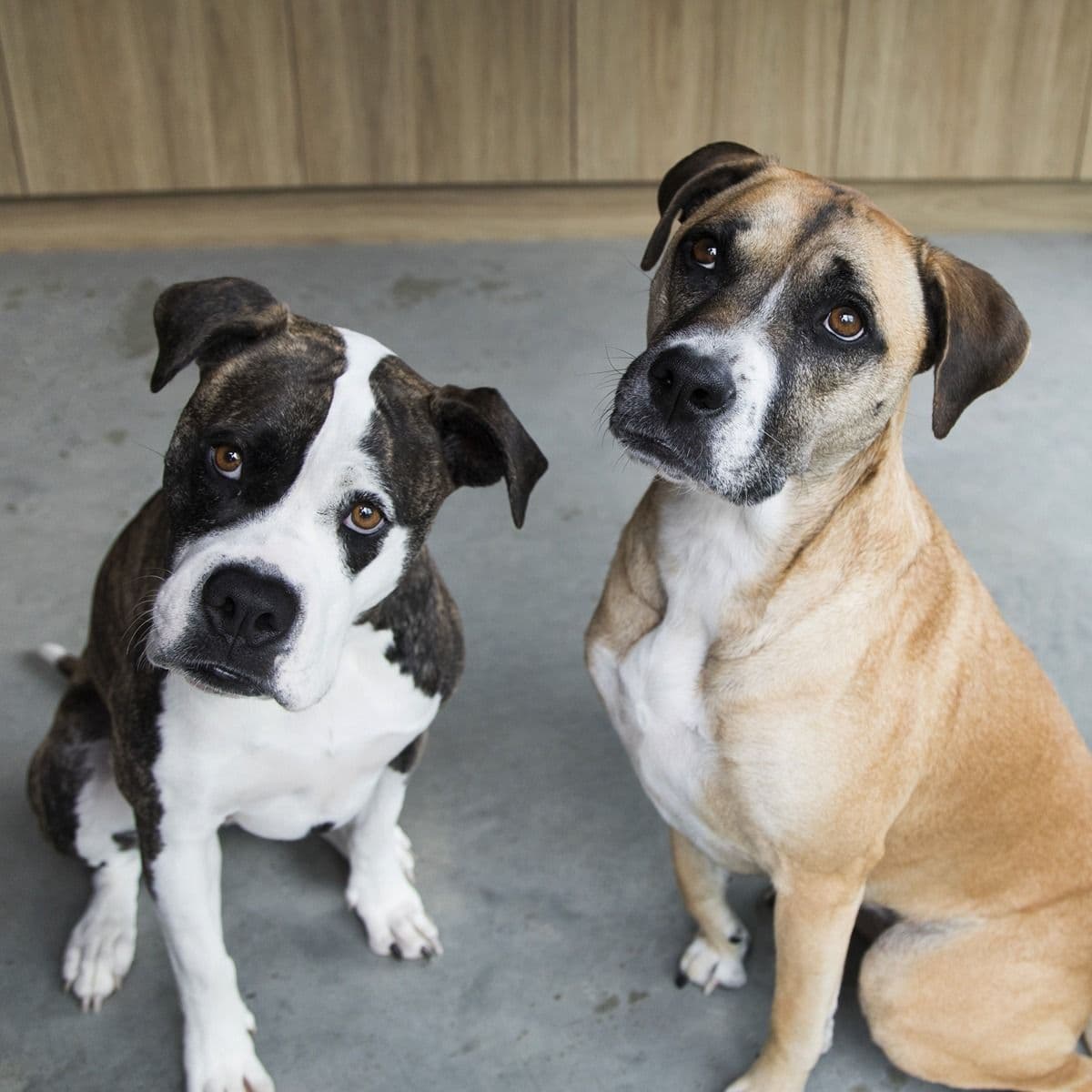
*Dusty and *Georgie
When *Belinda’s son decided to leave his relationship, his first thought was for the dogs, *Dusty and *Georgie. They couldn’t remain in the household — the environment had become unsafe. What began as controlling behaviour had escalated into verbal and physical abuse, and the dogs were caught in the middle, living through tension, shouting, and fear every day.
“When tensions flared in the house, the dogs often bore the brunt of it. They were crated for hours on end. It was a toxic, stressful environment, and it showed.” - Belinda
By the time Dusty and Georgie arrived at Pet Refuge, the impact of trauma was clear. Dusty had become intensely protective, anxious, and wary of strangers. Georgie had lost confidence, fearful and hesitant, showing stress in almost every interaction. Both dogs had developed behavioural challenges, including resource guarding and difficulty trusting people. They were underweight, constantly on edge, and overwhelmed by the world outside their unsafe home.
“From the moment I first called Pet Refuge, I felt supported. I knew they would be in safe, trustworthy hands.”
At Pet Refuge, every dog receives tailored enrichment and training to begin healing from trauma, including daily monitoring, structured routines, and gentle, reward-based approaches to rebuild confidence and wellbeing. Dusty and Georgie’s recovery centred on creating predictability and security, helping them relax, learn to trust, and re-engage with the world around them.
Every pet works through three progressive training levels, developing the skills and resilience needed for life beyond the shelter — from new homes to vet visits, walks in dog parks, and encounters with unfamiliar people. Because Dusty and Georgie had spent long periods confined as punishment, they were fearful of small, enclosed spaces. The team took a gradual, thoughtful approach to help them become comfortable in situations they were likely to face again, including small rooms, car rides, and vet clinics. Through positive reinforcement and carefully paced exercises, these experiences became calmer and more familiar over time.
Dusty’s training focused on trust-building and gentle socialisation, with supervised walks and calm introductions to new people helping him settle and release the need to stay constantly alert. Georgie received confidence-building exercises, enrichment, and bonding activities to encourage curiosity and independence. Their daily routines balanced physical exercise, mental stimulation, and emotional support.
The results were clear. Dusty and Georgie gradually transformed from anxious, overwhelmed dogs into happy, confident companions. When they were reunited with Belinda’s son, the difference was striking.
“They looked healthy. They were happy. Dusty and Georgie are safe, happy, and still side by side — that’s all I could have hoped for.”
Explore more
Read more pet stories
Read more pet stories, finding safety, their road to recovery and being reunited with their loving families.
Donate now
Join our Safe Beds for Pets family of regular givers or make a one-off donation to help pets and their families escape violence together.
Other ways to help
From fundraising, legacy gifts, purchasing a gift and more, there are many different ways you can support pets in need.